Buddha Garden
Discover the story behind the land, the people, and the purpose
THEN AND NOW OF BUDDHA GARDEN

THEN
In the Beginning
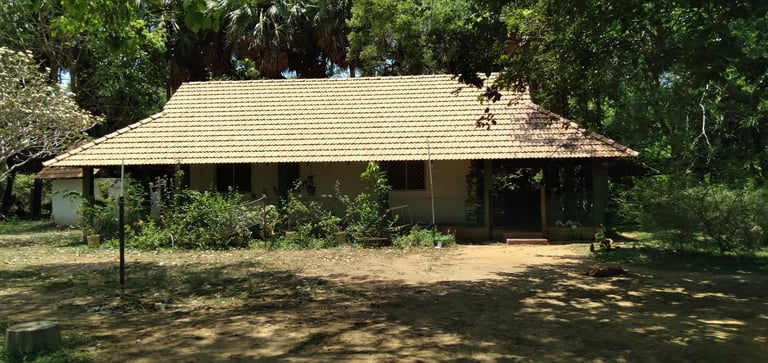
Buddha Garden started in January 2000 when Priya created a vegetable garden and a home for herself and two daughters on one and a half acres of what is now the neighboring Siddhartha Farm. After fencing the area, some fifteen vegetable beds were made. With the help of Arjun, a young Aurovillian, a range of seasonal local vegetables were grown which were distributed to various places in Auroville. During the next year, with the support of the Farm Group, the farm area was extended to include two newly purchased plots and in 2004 Buddha Garden Community Farm became independent.
In these initial years the farm slowly took shape. First by installing a water tank and irrigation system, building a nursery (which moved three times before settling in its present place) together with building accommodation for Priya and her daughters. We wanted to use renewable energy and so also set up our first small solar systems. It was during these initial years that people first came to help on the farm with gradually more people coming to visit to see and learn from what we were doing.
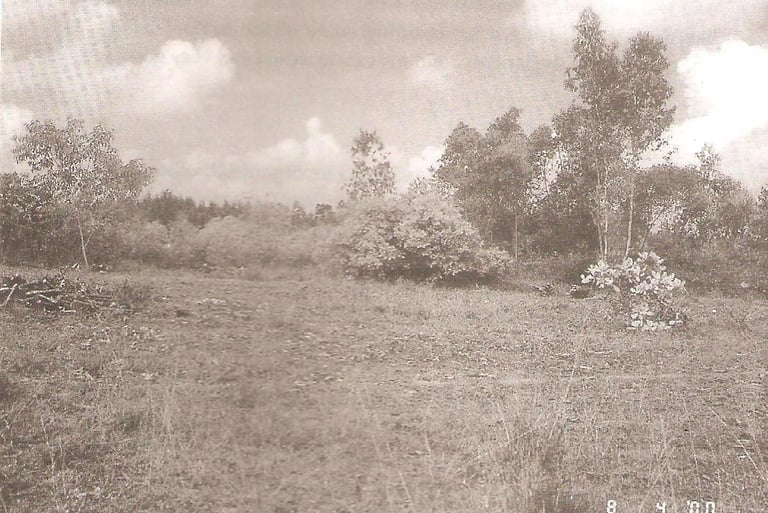
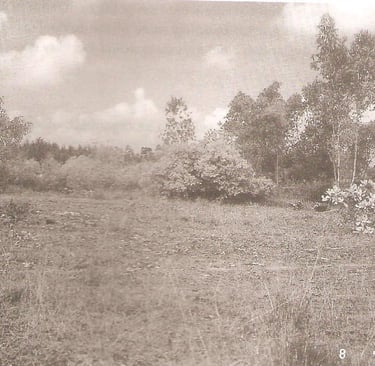
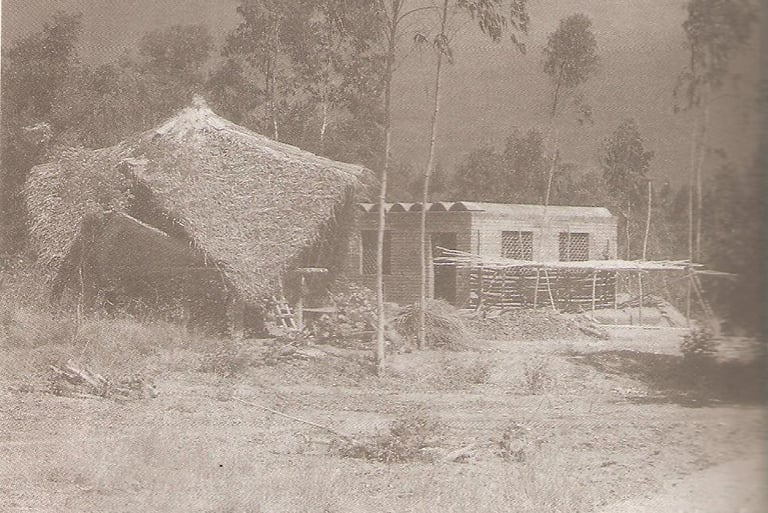
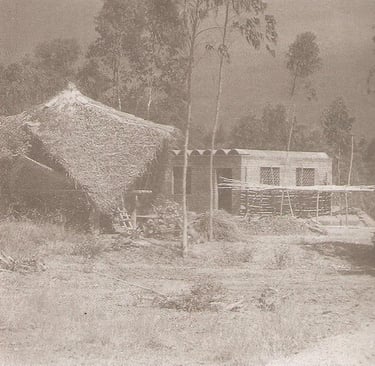
The first two buildings
The land
An Evolving Farm
Growing Food
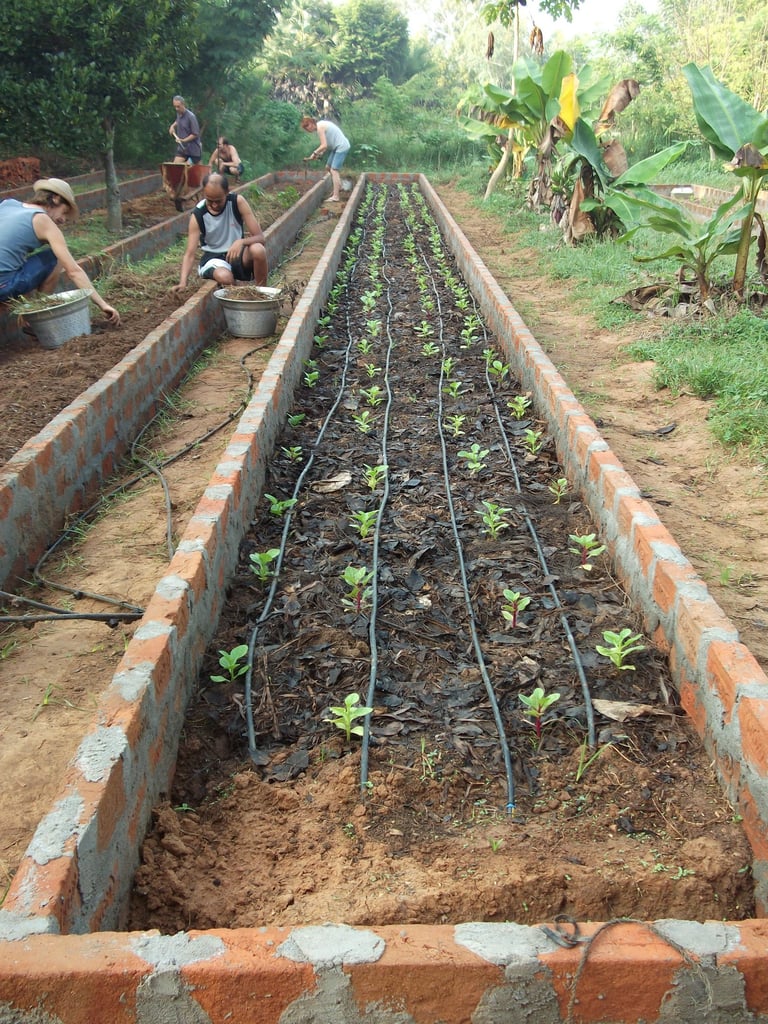
In the initial years we found it very difficult to grow anything as whatever we planted did not grow well and what did grow was attacked by pests. Eventually we realized that we needed to focus on improving the quality of our soil which was very poor. For many years it had been treated by pesticides like DDT which killed all the soil bacteria and soil animals as well as a lot of insects – both pests and ones that were harmless/beneficial to growing plants. Over the years with a lot of work making compost and mulch and carefully watching the results of our work, we watched our soil come alive and with it the ability to support food growing in a sustainable way. Which has enabled us to provide increasing amounts of food to the Auroville community.
It was from these food growing activities that our Earth Friendly Food Growing practice evolved. (click here for a short version of what our practice involves or here if you would like to find out more by reading Priya’s book on the subject)
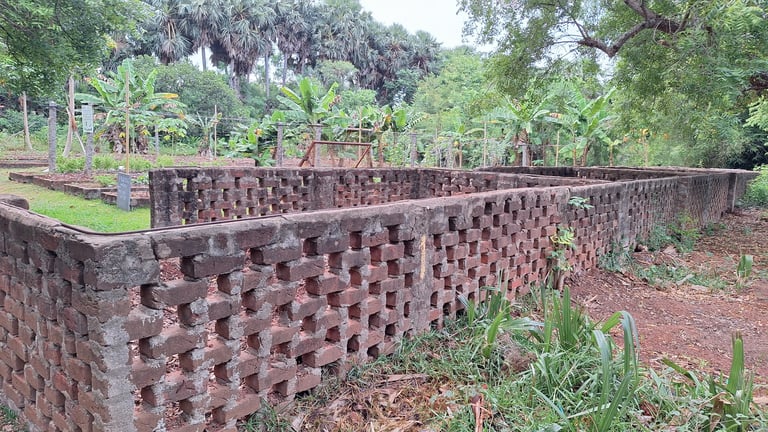
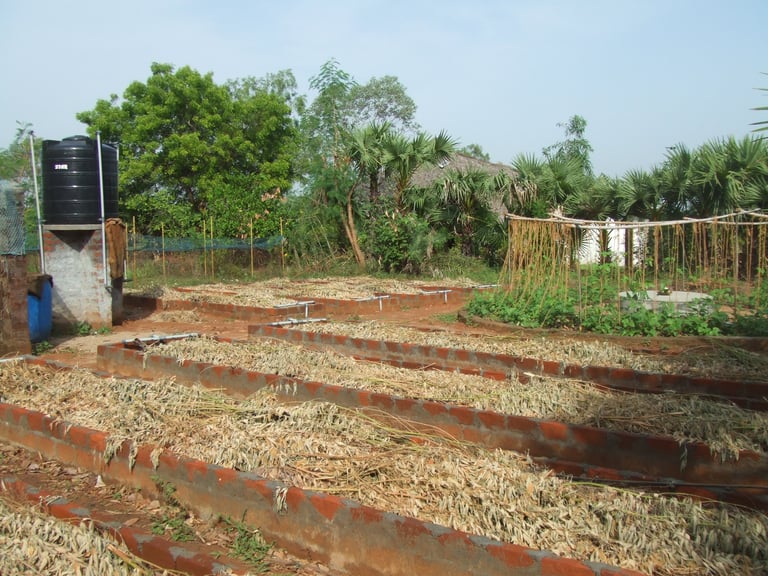
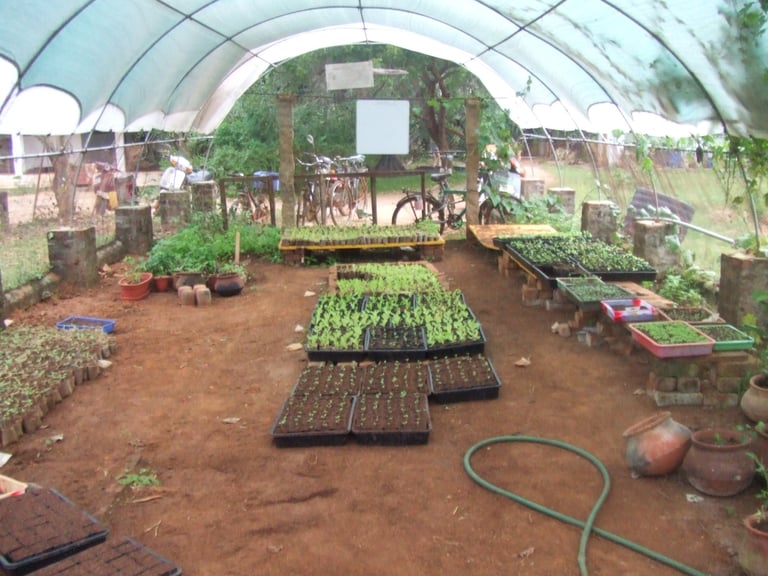
From the very beginning vegetables were an important part of the produce that we grew for the community. We experimented with a number of ways of making raised vegetable beds, eventually deciding that our brick raised beds produced the best results. Over time we gradually made all our vegetable beds like this. Eventually the farm consisted of six vegetable gardens all with a number of brick raised beds. We also built four large compost bins to help with our compost making which was a very important part of our soil regeneration on the vegetable beds and elsewhere.
With the help of John (who was a farmer from the UK before coming to Auroville) in the early years we tried growing rice in an area of the farm which regularly flooded. This took a huge amount of time, energy and people as we could not afford to mechanize the work. It was clear that given the small size of the plot of land it would be difficult if not impossible to grow rice here in a financially sustainable way. Eventually Auroville farmers as a whole decided that rice growing in Auroville was better carried out by a few specialist larger farms that have suitable rice land, a specialised work force and mechanized equipment that enables them to grow rice of better quality and more efficiently than we could do in Buddha Garden. As a result we decided to focus on growing vegetables and fruit.
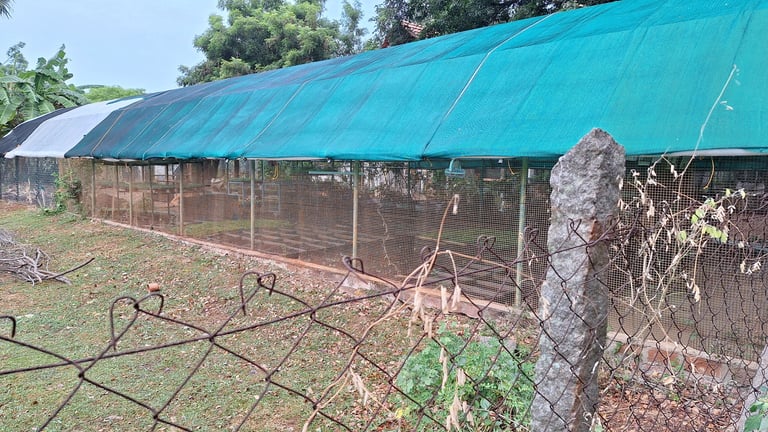
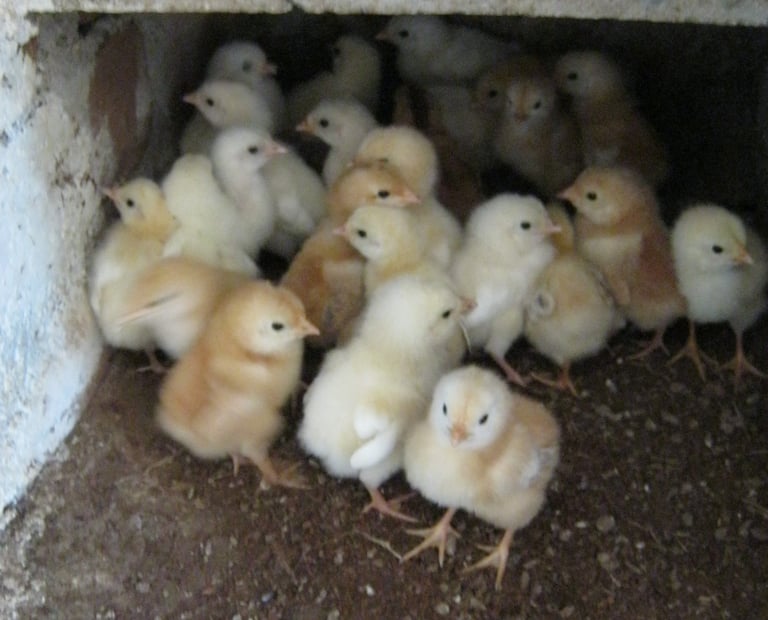
From the beginning I had ruled out having cows on the farm given its size (which would make it difficult to grow all their food which is necessary to produce organic milk) and the energy it takes to look after them well. At one time one of our apprentices kept goats but they didn’t fit in with our other activities. We tried – and failed – to produce organic eggs. After purchasing and rearing a large number of chicks, purchased from a Government agency, we found that none of them laid enough eggs to stop us losing money. Once again the farm was too small to grow all the food they needed and buying it was expensive and of questionable quality. Chickens brought a good energy to the place and it felt good having them around, so we have continued to keep a few chickens (and two turkeys at present) that we are able to feed from food obtained from within the farm. We have found that in addition to their good energy they are an invaluable help in making compost. They are a local variety of chicken that don’t suffer from the same health problems as those we first purchased. They don’t lay eggs in commercial quantities, but those they do produce from time to time are a bonus that we consume.
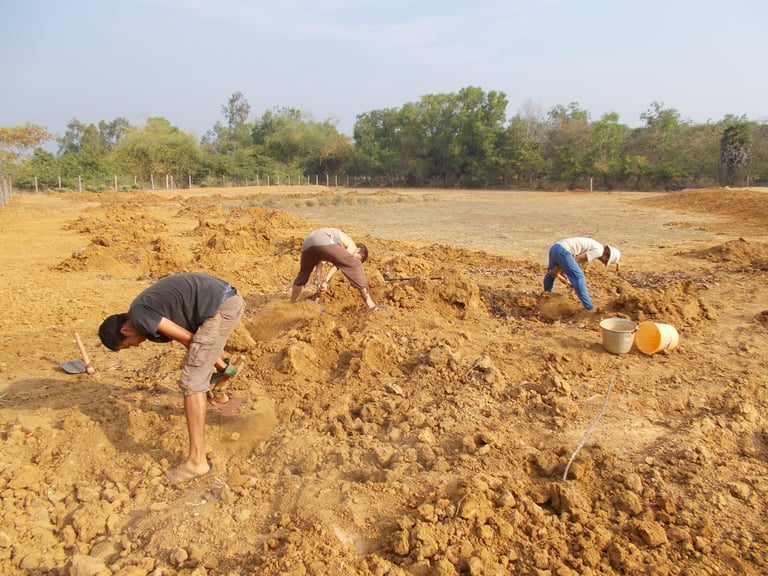
Over the years we have become more mindful of the need for diversity on the farm which helps keep the pests in check and to improve the soil. To improve diversity, we planted banana and papaya trees in different places amongst the raised beds. We planted several orchards including a cashew orchard mixed with other fruit trees. We have also carried out general land regeneration work which included creating several water retention ponds and planting a forest area as a buffer between the vegetable gardens and an outside road. We also built a stone circle for meditation and contemplation. Over the years two more plots of land were added to the farm, which we developed in different ways, bringing the total area of the farm to 12 acres.
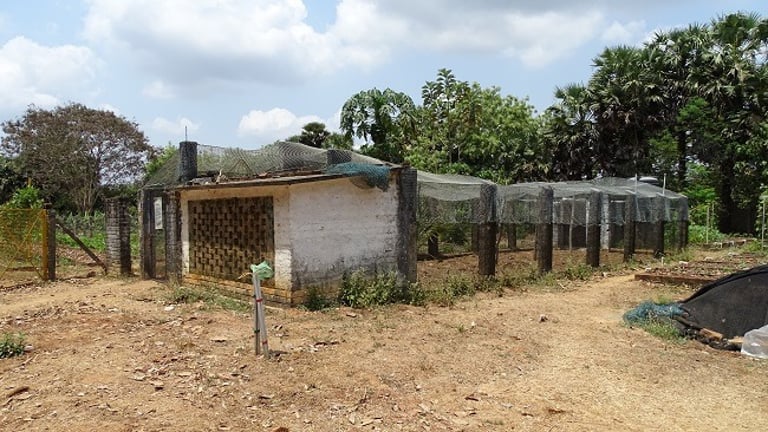
This work on the land has gone hand in had with expanding the farm infrastructure. As the farm developed and grew we realised that we needed a large dedicated store room to keep all our farm materials. This we built together with an area for vegetable sorting and weighing. We responded to requests by farm helpers to stay on the farm by building accommodation for them which consisted of four cabins with a shared bathroom. With more people staying we needed a community kitchen which we built. It was at this time that the initial small solar systems were brought together to make a large system for the whole farm which is still in use today.
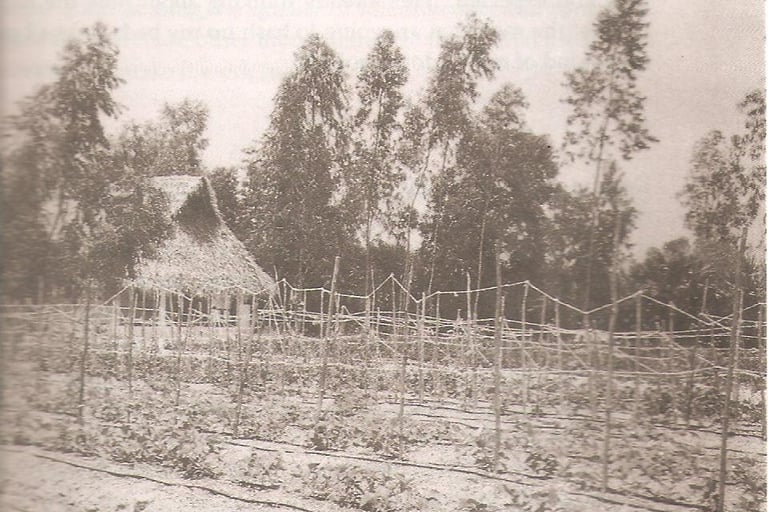
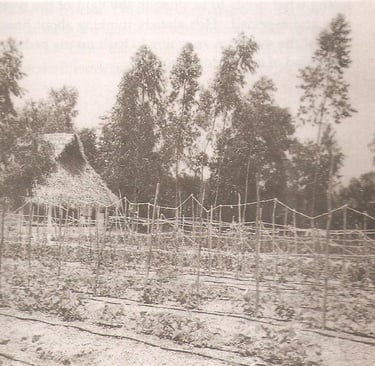
The FIRST FOOD GARDEN
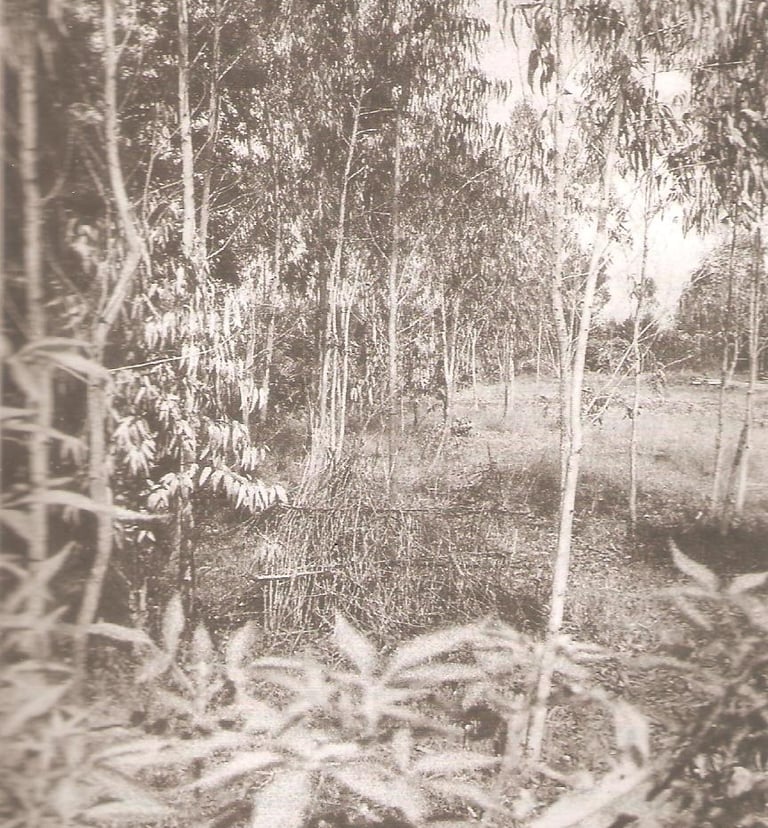
LAND WAS FULL OF EUCALYPTUS TREES
Learning and Experience
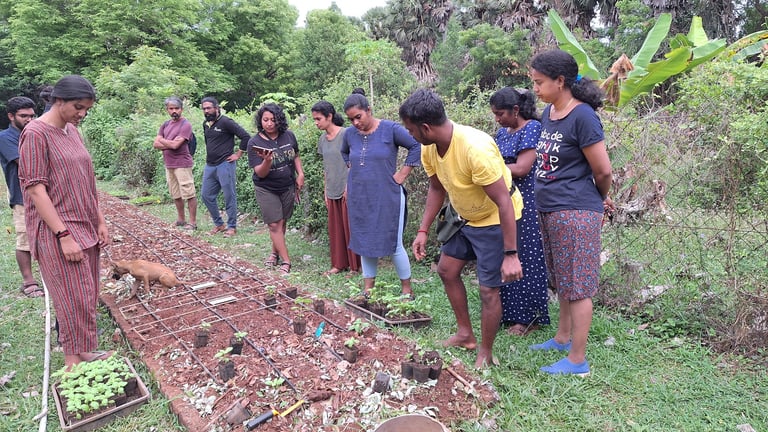
Our learning and education programs grew from our first years when, being very short of help, I wrote several notes requesting help and pinned them up on notice boards around Auroville. I was amazed at the response and the unaddressed desire of so many people to participate practically in the work of building Auroville – even when they were unable to stay for very long. It was from this initial response and my own background in teaching (in universities, further education and just before coming to Auroville, a farm school in Kodaikanal) that our various farm helper and educational programs grew. Over the years they have been a rich source for the farm both of practical work, new ideas and deep interaction, as well as helping the farm become more financially sustainable.
Our educational programs have ranged from a year long apprenticeship program for local young men set up during the first years of the farm to various experiential courses of varying duration. We continue to host a wide range of groups for visits/discussions, these ranging from young pre school children to elders from many different countries and walks of life. We particularly enjoy providing experiential learning to students of all ages so they can learn what it feels like to grow food as well as giving them technical information on how to do it for themselves. We have also on occasions hosted research students who have carried out several research projects on the farm.(click here for some of the research papers) We continue to create a range of learning resources for those coming to the farm such as posters, farm tours, videos(link) and books (shop)that we hope will inspire and be useful for those wanting to grow their own food.
The anchor for all our educational activities is the working farm of Buddha Garden and we see the education we do as going hand in hand with our farming. We want our students to have experience of a farm that is sustainable in every way and to understand something of the energy it takes to produce the food they eat. We also want them to see that there are real working alternatives to the present industrial farming, which they can support, so that we don’t destroy the natural world on which we all depend for our life and food.
People
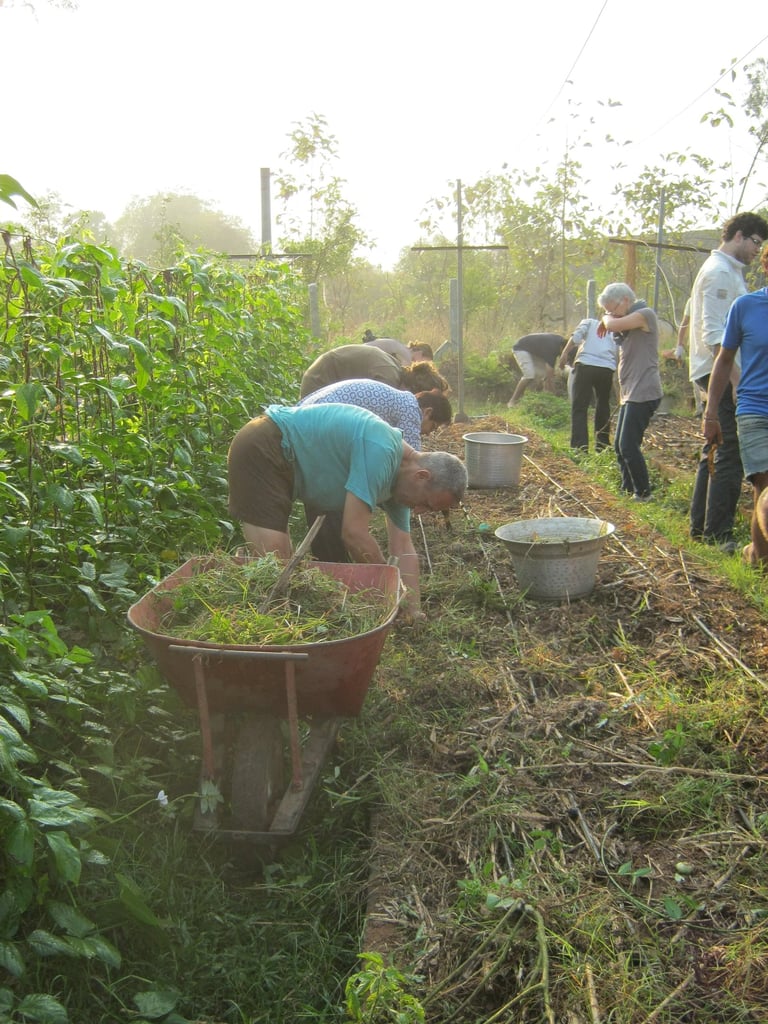
From the very beginning our farm helpers have always played a very important part in carrying out the regular farming work. Over the years we developed an infrastructure which enabled people who didn’t know much about food growing work to join in easily. Anyone who walks in wanting to help during our early morning work times is very welcome to do so. There have been a number of Aurovilians involved starting with Somasundaram who involved himself a lot in the first apprenticeship program. Around this time Vivek also became part of the team bringing his academic and research skills with him. Later Pierre joined the team while also developing his food processing business. In 2xxx Rajan, one of our original apprentices who eventually became Aurovillian, joined the farm full time and now lives here with his wife (who works in Auroville bakery) and son Magzhiran. At present the farm is run by Priya and Rajan with three female regular workers together with any farm helpers who can either stay on the farm or come on a daily basis.
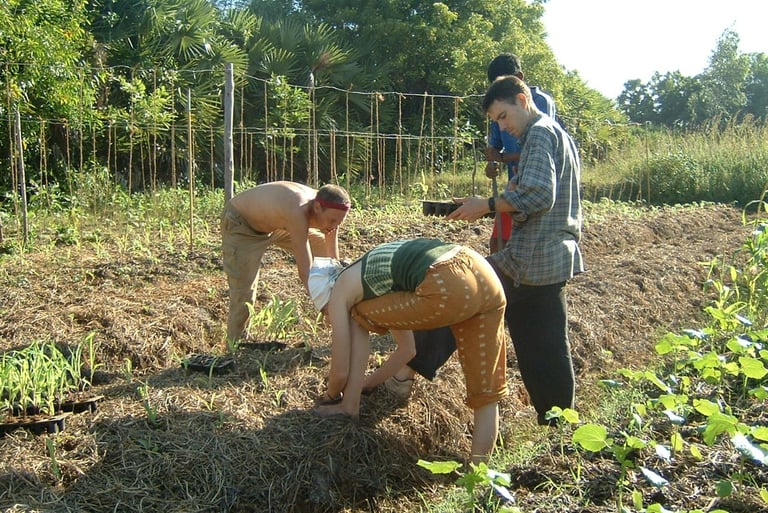
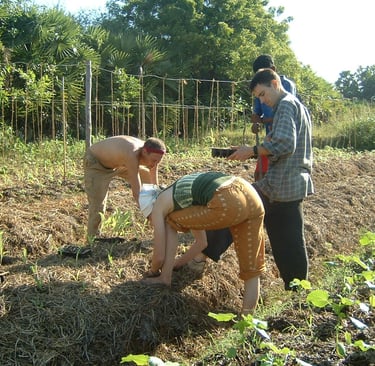
2004 : FIRST VOLUNTEERS
NOW
THE COMING OF THE ROAD – HISTORY AND ONGOING UPDATE
BACKGROUND
Early in 2022 Buddha Garden received an email from the Auroville Foundation Office, informing us that a VIP road was planned to go across the farm. In addition to the road, we were told that an unspecified amount of the farm would be turned into car parks for the nearby Visitors Centre. We were advised that we should start to think about how to relocate the farm although that is impossible. The best we can do is relocate the farm activities and start all over again somewhere else.
At first we spent quite a lot of time and energy trying to find new land onto which we could move. Our requests to various groups for help in doing this were met with little interest with no realistic alternatives being offered. Some land was suggested by the Foundation Office and we went to have a look, but in all cases it was insufficient for our needs and none had adequate access. Which was probably why it wasn’t already being used for farming or something else. It was at this time we were also told that Auroville had little or no budget to help us move and develop the infrastructure on a new place. Requests, both verbal and written, as to how we should fund such a move were met with silence.
Despite repeated requests for clarification over the months and years since the first announcement was made no one in the present administration has been able to say when the road might come, precisely where it will go or what will happen to the farm activities when the land is repurposed. Except that we continue to be told that the VIP road will eventually be created.
UPDATE JULY 22nd 2025 – the road is coming because ATDC says so
On July 19th 2025 a group from ATDC (the planning department of Auroville at the Town Hall) came to Buddha Garden and confirmed that the planned VIP road is to go right through the middle of the farm. They told us that the width of the road will be nearly 20metres which includes the actual road 10 metres wide together with a shoulder of 3 metres each side and a further 1 meter for a path.
We were shown a map and it was explained how most of the area which is now Buddha Garden will be the site for a so called 'Western Access Node'. This affects the farm’s critical infrastructure, (see attachment 1, for map based on map shown to us by the ATDC)
This and other attachments can be located here: https://drive.google.com/drive/folders/1R8nkMy30pPM_MUkdFNUyy4h09VtElWek?usp=drive_link.
Apparently plans for this area include not only the new road but an electricity substation together with a shopping mall, restaurants and car parks. The group told us there will be no place for farms and that all the farms in the area (including, presumably, Siddhartha and Shambala farms) must relocate and should start the relocation process now. I told them we had been asked to start the process of relocation two years ago when we were first told about the road and explained about the difficulties we had experienced in finding a suitable plot of land to which the Buddha Garden activities could be moved. You can see my report about this here (link). Despite repeated requests this was never followed up by ATDC although we continued and continue to informally look for more land.
A factor which has never been resolved, either then or now, is how the relocation will be financed. The farm has no money for this and neither do I. When I asked the ATDC group about this I was told the money would come from 'donations and government grants' but no one knew how or when or even if these will be available. Without a plot of land it is difficult to estimate exactly how much will be needed to relocate the infrastructure but I think it will probably be in the region of Rs2crore. (please see here (link) for Buddha Garden asset list)
Finally the group said they would arrange a meeting for ATDC and FAMC in the following week to discuss with Buddha Garden about relocation. Since then we have heard nothing. This despite following up with questions about whether Buddha Garden is to be replaced or discarded. There has been no response.
It is interesting to note that the Auroville Foundation Office maintain they are following a development plan created by Mother. This plan does not contain a VIP road anywhere.
UPDATE 23rd SEPTEMBER 2025 – the farm infrastructure can only deteriorate
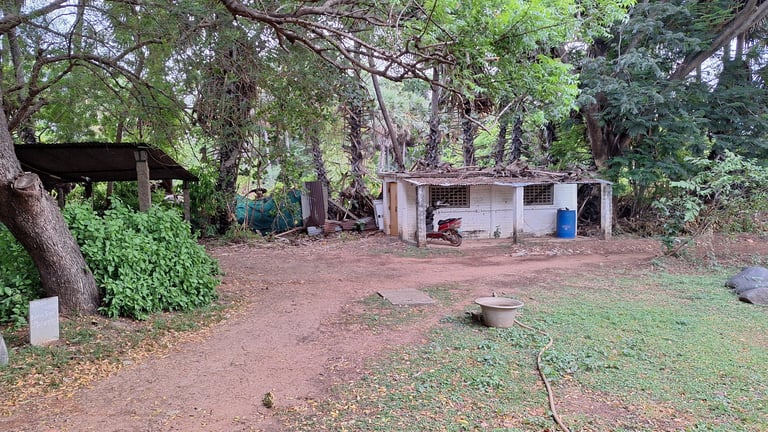
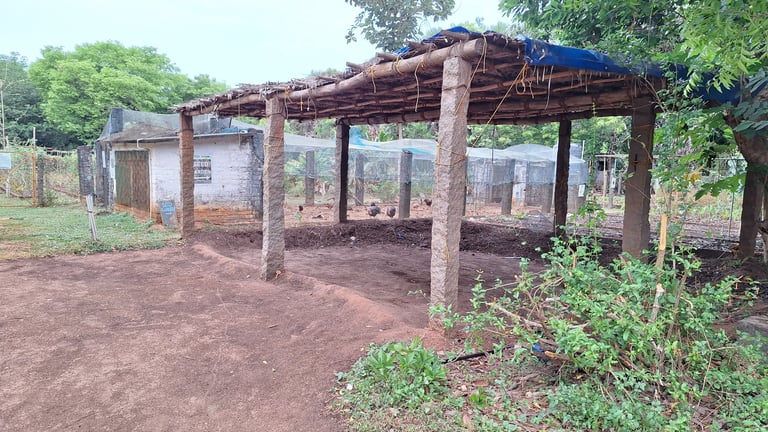
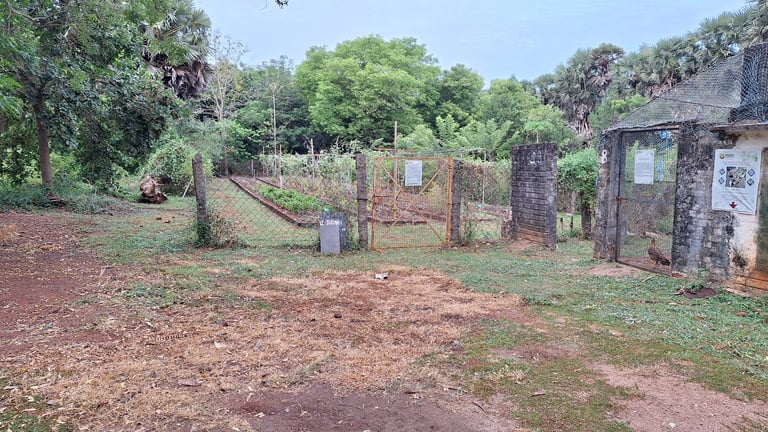
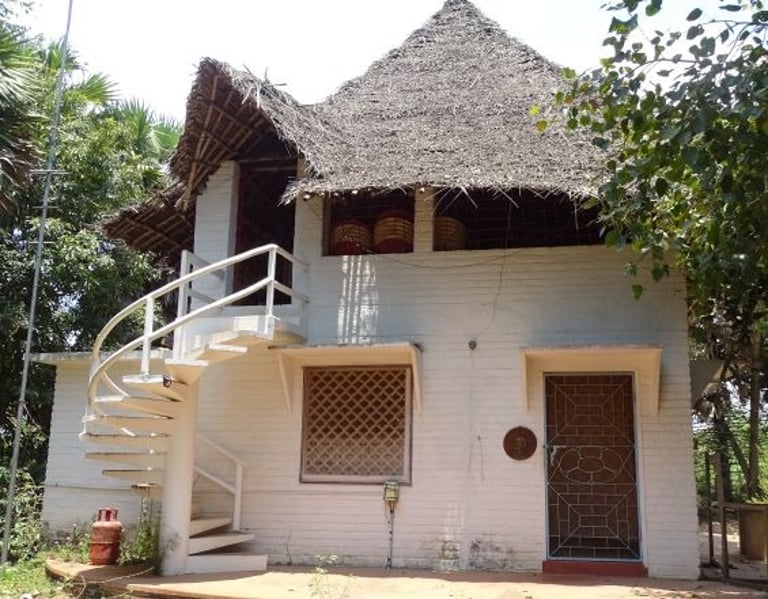
For the last three years, ever since we have known about the road, we have not made any investment in the infrastructure which includes the houses where both Rajan and Priya live. We were also recently advised by Housing Service not to do any repairs to the domestic houses. Housing Service was contacted to explain that for Priya’s house this meant that the fragile keet structure on the roof of her house would probably be destroyed by the next monsoon rain. In which case water is likely to get into the fabric of the house which will speed up its deterioration.
We didn’t have to wait until the monsoon to show this when we had some very heavy rain in mid September. This increased the holes in the roof and there was a huge puddle on the floor of the upstairs room. These pictures with an explanation were sent to the Housing Service with a request for ideas as to what we should do. The keet could easily be replaced in the coming weeks before the monsoon starts, but neither the farm, Rajan or Priya have any money to do it. There has been no reply.
After further heavy rain on October 3rd we have written to the Housing Service again with further pictures of the larger puddles and holes in the roof.
UPDATE 26th SEPTEMBER 2025
The dispute with neighbors was reignited when Buddha Garden’s pump stopped working and we had to buy a new pump and get it installed. The neighbors did not allow either Rajan or myself to enter their farm making it very difficult to get the pump installed, although eventually with the help of other Aurovilians we managed to do so. We are aware this is not the end of the issue and although for the time being, while it is raining, things are quieter. Let us hope that before the hot season comes, with less water for everyone, we can come to agreement about water sharing.
UPDATE OCTOBER 5th 2025 – in 2023
we had had conversations about a place called Unity Farm and I was asked whether I would be interested in taking it over. I wasn’t, because although I was interested in the educational aspect of the farm there would be no room for Buddha Garden farming activities. So it was given to someone else to oversee the project which consisted of splitting the land up into different areas which were given to various young people who were interested in farming to look after. The idea being that this would enable them to eventually move to take over an Auroville farm.
For some time the land has stood empty and I got an email from the Farm Service asking if I would be interested in taking over the land for Buddha Garden. I explained the access and water issues that I knew were there and explained that these would have to be resolved before we would move there. We then received an email from Auroville planners formally offering the land to Buddha Garden and that we would get permission to drill a new well. This resolved the water issue. So far the access issue has not been resolved so everything is stalled until a resolution can be found. Even if we do manage to do this it seems there is still no funding for the move.
UPDATE 29th OCTOBER 2025
A group of people turned up from ATDC and Road Service and over two days mapped out where the road is going to go. At the same time Rajan went to the talk to the planners to discuss the possibility of moving the Buddha Garden activities affected by the road to the back of the farm. We are now waiting for the map that will show where the road is going to go. We will then create a map/proposal of how we would configure the farm on the back land of Buddha Garden. So that all the activities affected by the road and which have to move could go there. We are still waiting…….
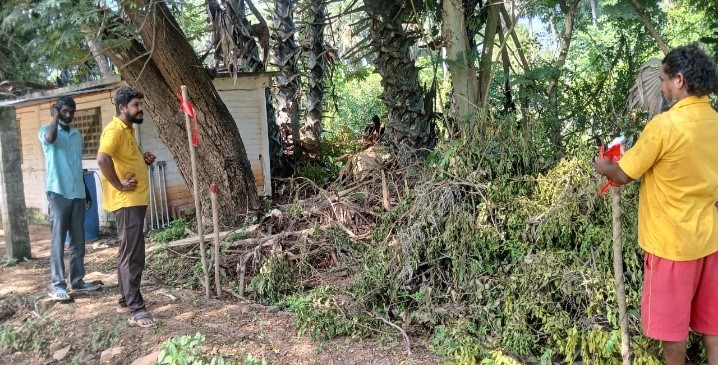
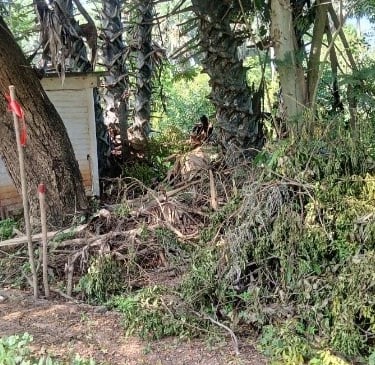
Measuring where the new road is going to go
A NEW VISION FOR A NEW REALITY
There is a saying ‘Live like you will die tomorrow, farm like you will live forever’ and I have thought about this a lot during these last difficult and uncertain years. To farm in a sustainable way means working with the land, aligning ourselves with the way that nature and natural processes work together within nature’s time. When the farm has no long term future that becomes impossible. Although we have continued to grow food for the community, without that collective long term commitment to the land of Buddha Garden we feel very constrained about what we can do.
As a working organic farm Buddha Garden aimed to be sustainable in every way - ecologically (growing our own seed, making all our own compost, running the farm on solar energy etc), financially and socially while producing food for the community. I saw ourselves as being a living example of a sustainable food growing project that would hopefully inspire and educate those interested in creating something similar for themselves. The upheavals caused by the pandemic which exposed the fragility of our food systems worldwide increased my motivation for sharing knowledge and providing practical learning.
Watching the farm infrastructure crumble in these last years as production gradually decreased has been soul destroying. Yet I found that other people still wanted to come. That even although the farm felt to me as if it was dying some people felt as if what was in the farm was important enough to them to seek us out to find it. Gradually as I spoke to our many visitors I came to understand that there was still a role for myself and everyone in Buddha Garden.
Buddha Garden’s vision has never been a static set of ideas about the farm’s direction but has evolved and expanded alongside the development of the farm. For many years we described our vision as follows:
· To grow food with love and awareness for the community of Auroville; food that nourishes every part of our being, using methods that nurture the earth.
· To create a sustainable farm that is financially viable and in this process, provide a place where others can come to share with us.
· To experientially learn and understand what it means to farm organically and to live lightly on the earth.
Like a compass it has helped us find a direction for the farm but unlike a compass the vision has evolved as it has responded to and helped us navigate changing environments. In the last year I have been surprised at how this vision has expanded to encompass a new reality rather than to die along with the farm as I imagined it would do. It feels as if the vision is expanding and evolving to take myself and other to places beyond the farm as I continue to find ways to share the essence of what I and others have experienced and learnt in Buddha Garden.
MOVING FORWARD
Setting up this website is one of the first ways in which I am sharing what I have experienced and learnt over the years in Buddha Garden. For as long as the land of Buddha Garden continues to exist it will be open to people coming to help and to learn about growing food in an Earth friendly way. I feel I am spreading the blessings of this by sharing both in person in different places (to find out more click the link here) and by distributing what I see as the essence of Buddha Garden through sharing information about growing its seeds and with the books that I write and have written about what I have come to understand. I continue to create a weekly video about the work I am doing wherever I may be. (link here)
During my years of working on this land I have thought long and deep about the relationship I have with it and especially how the land has communicated with me as I have worked. I feel a strong desire to explore this in more depth and to understand more about over time and in different groups humans and the land on which they work have communicated with each other. Hopefully this might provide insight about the present disconnect that so many humans have between themselves and nature and how it might be repaired for the benefit of both. ( click here for information about Priya’s research work on this subject)
As we share our seeds and experience in practical ways this website is an evolving hub for what has been, what is, and what is to come. That although the land of Buddha Garden might disappear, the spirit of what we have done and are still doing in other places, can be widely shared.
Perhaps the spirit of Buddha Garden that I hold and express on this website can even be reignited and anchored on land somewhere else. I am open.
SHARING THE ESSENCE OF BUDDHA GARDEN
Surprisingly to me, people are still coming to Buddha Garden. They still want to understand more about what we are doing and I have had interesting and sometimes deep conversations about both the food growing and how we are responding to the present situation. This has led me to think about what Buddha Garden still has to offer and how I can share this with others. What is the essence of Buddha Garden? Can it still be found if the farm ceases to exist? I feel that the essence of Buddha Garden can be found in the seeds that we have developed over the years as well as what I have to say about all the experiences I and others have had on the farm. Slowly we are developing ways of sharing these.
GROWING AND SHARING OUR SEEDS
Ever since Buddha Garden started we have always had a seed garden. In the very beginning this was a necessity because of the difficulty of obtaining open pollinated seeds which had not been treated with poison to keep out the bugs. There used to be one person in Chennai who grew and sold open pollinated organically grown seeds which were available from time to time. And of course Auroville farmers have always grown and shared seeds – the long beans that came originally from Australia , the brinjal that we know grows in the Auroville situation etc. Gradually in Buddha Garden we learnt how to grow, process and save the seed and eventually were able to purchase a solar fridge which enabled us to keep more seed for longer.
Originally we did not grow our own seed very systematically, but the benefits of doing so were brought home to us by the 2012 cyclone. The cyclone made landfall very close to Auroville and was very destructive. Many trees were blown down and in Buddha Garden a roof came off one of our houses and the nursery was badly damaged. There were several beds where what we were growing was destroyed because of falling debris. So there was a lot to do to clear up and we found that having our own source of seed was crucial to getting back to where we had been very quickly. Within two to three weeks the damaged beds had not only been repaired but already had plants growing on them.
As time passed we found there were other advantages to growing our own seed. Over several generations the plants that grew from our seed gradually adapted to the conditions in Buddha Garden. The plants that grew from this seed became resistant to the many pests that in the beginning would completely devour them. The plants that grew from these seeds became able, over time, to produce during extra heavy monsoons, unexpected rains or increasingly hot and dry periods; able to grow well whatever the conditions. I see our Buddha Garden seeds as containing something of the essence of the place – while at the same time having the quality of being able to adapt to whatever situations demand. We now grow and share our seeds more consciously by developing a workshop about seeds together with a book and posters about how to grow and save them.
SHARING OUR EXPERIENCE
When I started Buddha Garden I had had very little experience of farming and my main learning has been through talking to other farmers and the day to day tasks of food growing. I found the land itself to be the most potent teacher. As the farm took shape and in the years that followed we had a wide range of people coming into Buddha Garden, wanting to know more about our farming activities, often so they could try something similar themselves when they returned home from Auroville. Increasingly we saw that Buddha Garden was a potent place of learning and over the 20 years of Buddha Garden’s existence we have had an apprenticeship scheme and various courses for students of all ages. Early on we started a farm helpers scheme and Buddha Garden is still a place where if you turn up when work starts (click here for work times) you can jump straight in and help with whatever needs doing. People from all the world have come to stay in Buddha Garden for a longer and deeper experience of our food growing (click here to find out more about staying in Buddha Garden) with some being inspired by their experience to create their own food growing projects in other parts of the world. For me, developing Buddha Garden and the daily work with the soil that this entails has been my spiritual practice as much as a practical farming project. For me has been a deeper than anything I have experienced studying spiritual texts or talking about spirituality with others.
This experience has been encapsulated in several books I have written and which I intend to expand and make more available through this website and social media. (click here to find out more about what is available) While we still have access to the land we intend to create a new walking paths around the land together with many new information posters. The aim will be to produce something which people coming to see the farm can use on their own to understand more about what they see and what we have experienced. This will enable us to reach more people coming into the farm with more information and hopefully understanding of the work we do. It will also provide us with the opportunity to give everyone the most up to date information about the farm, the challenges we are facing and how we are responding to them.
HOW WE WORK WITH NATURE
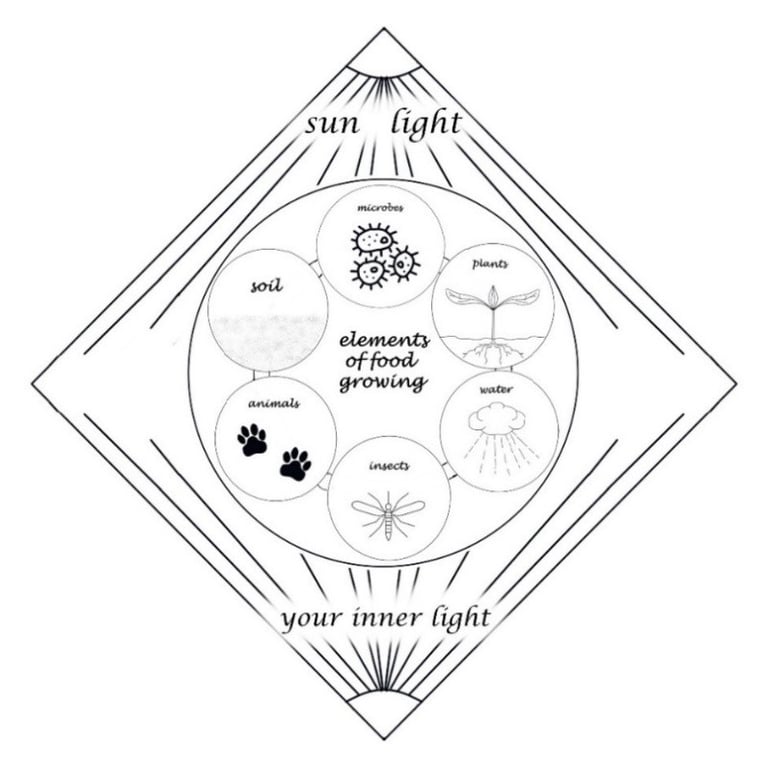
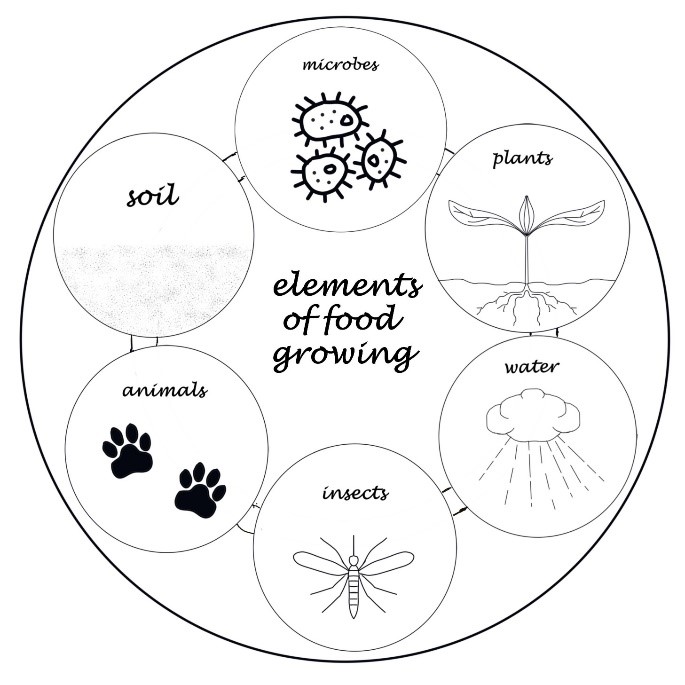
To grow food we need soil, microbes, water, plants, insects and animals. We call these the “elements of food growing”, each of which comes from the Earth and is sustained and renewed by Earth’s natural cycles. We work with these elements in ways that support the natural cycles. This enables each element to be continuously renewed and thus we can carry on growing food in Buddha Garden indefinitely.
In nature we see that the fertility of the soil is sustained by the microbes in the soil that break down organic matter into plant food. In our garden we use this process for making compost. The organic material we use to make our compost heap is broken down by soil microbes to make plant food. Every time we plant we add more compost to the soil so it retains its fertility. We see that the healthiest plants in Buddha Garden are those that are native to the place and which grow in season. We protect the natural plant diversity by growing and using our own seeds. This has the added benefit that our plants become adapted to and thrive in our place. We understand that water is a precious resource that is needed by all living beings. In our garden we use it carefully and protect the cycles that bring water to us by planting trees and making ponds that stop water from taking soil away from our land.
This approach is particularly important when we are faced with things like pest attacks that hamper our food growing efforts. Any action we take has to both deal with the problem and support the natural processes. If we kill pests with powerful pesticides we might kill other beneficial insects as well as damaging our own health. We know that the number of beneficial insects such as bees that pollinate and termites that help break down compost far exceeds the number of pests that we have. We do not therefore seek to eradicate pests. Instead we take a range of measures to stop them being a nuisance. This includes things like crop rotation (to stop build up of pests in the soil), increasing the diversity of insect species (which our research shows limits the number of pests) and planting pest resistant (usually local) plants in season.
Since we are a small farm we do not have many animals as these need a large amount of land and a lot of care if they are to live well.We only have a few chickens that we feed from the land and which we use mainly to make very powerful compost, although from time to time we also enjoy their eggs.We are also visited by many wild animals, and as we have done for insects, have found ways to stop them being a nuisance.We make sure we pick the corn as soon as it ripens before the parrots get to it.If squirrels start eating one of our bottle gourds we leave it for them to finish off so they don’t eat any more bottle gourds on the plants.
BRINGING IT ALL TOGETHER
The way in which these elements are brought together into an interlocking whole depends on many things. The practical needs of the grower for food and income, the availability of water, seasonal variations that limit what and how much can be produced. It also includes the human resources that are available. Maybe help and support can be obtained by cooperating with other food growers as well as from the community for whom the food is being grown. Manifesting a particular philosophical or spiritual focus might also be important.
Given the infinite variety of people and places there is not a mechanical way of implementing this kind of practice. No two people grow food in exactly the same way. If someone else had come to the land of Buddha Garden it would have evolved into a very different place from what it is now. Over the years a large number of different people have lived and worked in Buddha Garden. Over time we have watched carefully to see how our earth engagement has affected our food growing. Any action we have taken balances the need to protect our food growing with the need to protect the natural cycles on which our food growing depends.
Understanding each of the elements, the natural processes that support them and how best to work with them is a lifelong learning process There will always be more to learn-- from books, internet, teachers and other farmers, but the most profound learning is rooted in the practical food growing process. The sum of this learning is what I call “the inner light”. The sum of our evolving knowledge, understanding and awareness about the best way to grow food in our place at any one time. It balances the outer light of the sun under which we grow food in Buddha Garden. We work to sustain the earth as the earth sustains us.